Protecting the tiger means protecting entire ecosystems — when the tiger thrives, so does the forest around it.
Tigers are endangered, with wild populations threatened by habitat loss, poaching, and conflict with humans. Conservation efforts across Asia focus on protecting habitats, curbing illegal trade, and supporting community-based programs to help these iconic cats recover.
Conservation
Unlike many big cats, tigers are largely solitary and territorial, patrolling ranges that can span dozens of square kilometers. They are strong swimmers and often cool off in rivers and lakes during hot weather. Tigers hunt mostly at night, relying on stealth and a sudden, powerful ambush rather than long chases.
Behavior and Habitat
- Scientific name: Panthera tigris
- Weight: up to 300 kg (660 lbs) for the largest subspecies
- Habitat: forests, grasslands, and mangrove swamps across Asia
- Diet: carnivore — deer, wild boar, and other large prey
- Lifespan: 10–15 years in the wild
- Distinctive feature: no two tigers share the same stripe pattern
Key Facts
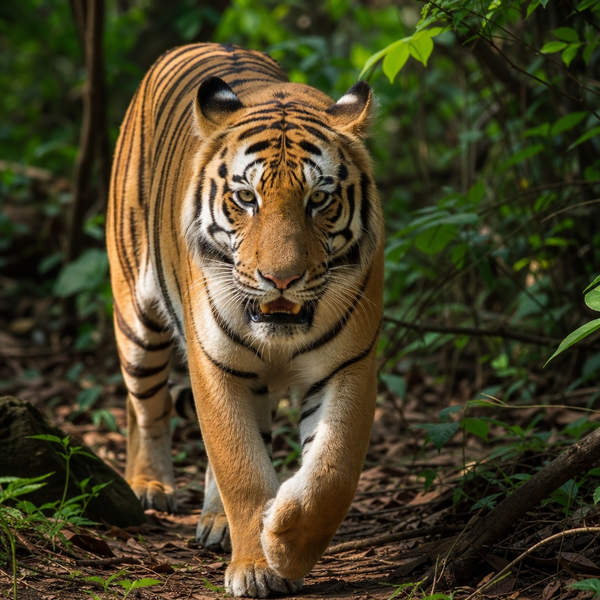
The tiger (Panthera tigris) is the largest of the big cats and one of the most recognizable animals on Earth. Known for its bold orange coat and dark vertical stripes, the tiger is a powerful predator native to the forests, grasslands, and wetlands of Asia.

